
 Online
NEWS 2 Scoring
The National Early Warning Score 2 (NEWS2) is a standardised system developed by the Royal College of Physicians to sup…
45-60 minFrom£20.99
First Aid Awareness Training gives learners essential awareness of how to recognise injuries, sudden illness, emergency warning signs, safe escalation routes, workplace first aid arrangements, infection control, confidentiality, and factual reporting. This is awareness-level training and is not a replacement for practical workplace first aider qualification or employer competency assessment.
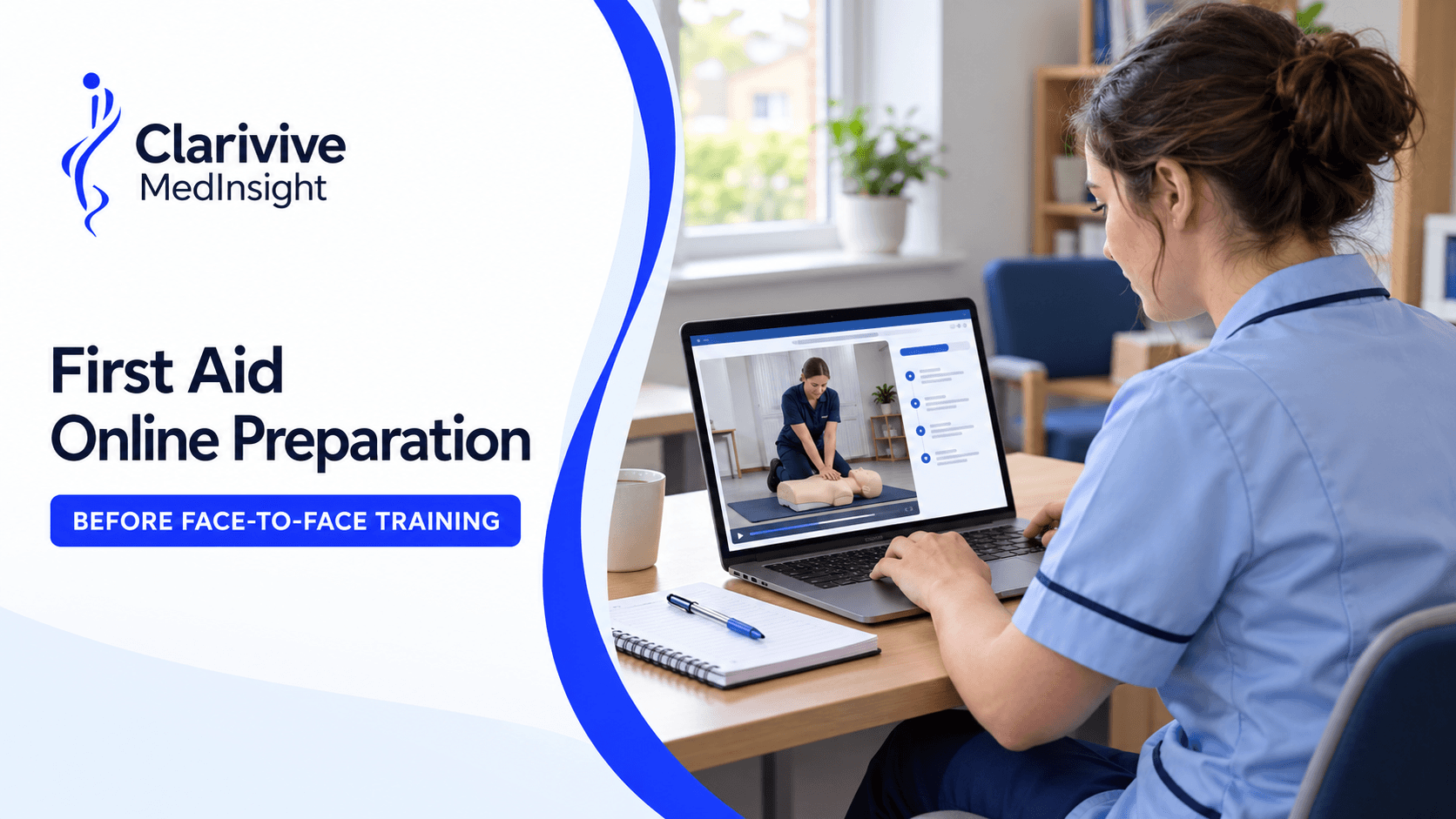
This course introduces the knowledge needed to recognise common adult first-aid emergencies and understand appropriate immediate action. It covers assessing an emergency, obtaining help and responding to sudden illness or injury in health and social care settings. Learners will explore their responsibilities, the limits of their role and how to support a person until further help takes over.
Course Information
Course Aim
To develop learners’ understanding of how to recognise adult first-aid emergencies, obtain appropriate help and provide immediate assistance within their training and role.
Course Objectives
This course will:
Learning Outcomes
By the end of this course, you should be able to:
Who This Course Is For
This course is intended for care workers, healthcare assistants, support workers and other staff working with adults in care homes, domiciliary care, supported living and related health and social care services. It is suitable for new starters developing first-aid awareness and existing staff refreshing their underpinning knowledge.
Course Scope and Limitations
This course covers adult first-aid awareness. It does not include paediatric first aid, advanced resuscitation or specialist rescue procedures.
Online completion demonstrates knowledge assessed through questions; it does not demonstrate practical competence or qualify you as an Emergency First Aid at Work or First Aid at Work first aider. Practical skills require appropriate training and assessment.
Follow your workplace emergency arrangements and act within your training and competence. In an emergency, obtain help promptly and follow instructions from the emergency services.
Continue learning
Discover more online training selected from our course catalogue.
OnlineThe National Early Warning Score 2 (NEWS2) is a standardised system developed by the Royal College of Physicians to sup…
We strive for excellent training experiences and continuously improve for learners and organizations.



Because you deserve a training platform that delivers.


