Pressure Ulcer Prevention
A pressure ulcer is localised damage to the skin and underlying tissue, usually occurring over a bony area or beneath a medical device. It develops through sustained pressure or pressure combined with shear.
Pressure ulcers can cause pain, infection, reduced mobility, longer recovery and serious harm. Many are preventable through early risk recognition, regular skin observation, repositioning, suitable equipment and prompt escalation.
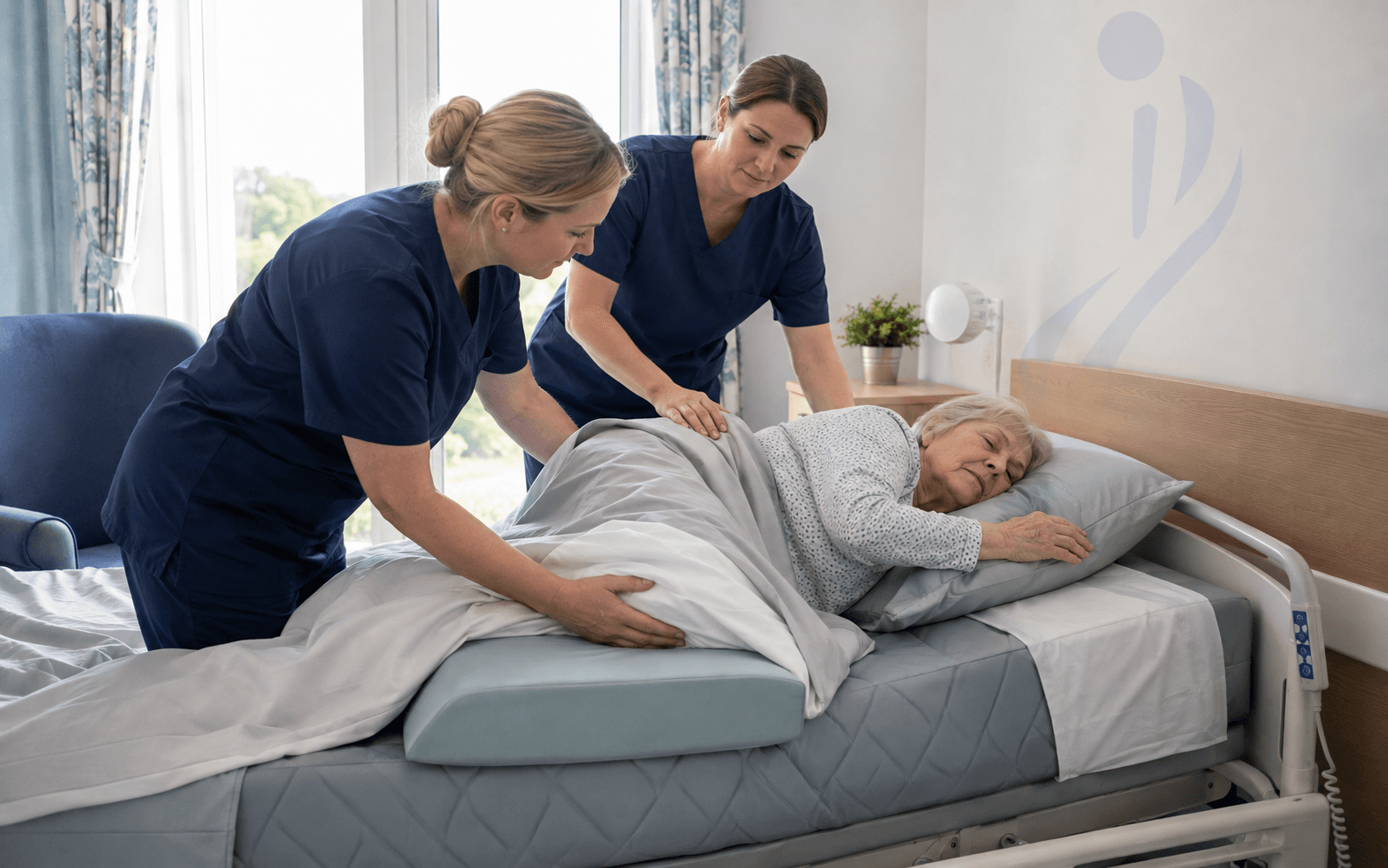
Aim of the Course
This course aims to help frontline health and social care workers recognise pressure-ulcer risks, take appropriate preventive action and report early signs of skin damage promptly.
It promotes person-centred prevention that protects skin integrity while maintaining comfort, dignity, independence and informed choice.
Scope of the Course
This course is suitable for healthcare assistants, care assistants, support workers, senior carers and similar frontline staff supporting adults in care homes, supported living, community services and other care settings in England.
It provides awareness and role-appropriate knowledge. It does not qualify learners to perform formal clinical risk assessments, categorise pressure ulcers, prescribe pressure-relieving equipment or provide wound treatment independently.
Learners must follow the individual’s care plan, workplace procedures and instructions from appropriately qualified professionals.
What This Course Covers
The course covers:
- How pressure ulcers develop
- Pressure, shear, friction and moisture
- Common risk factors and vulnerable individuals
- Frequent pressure-ulcer locations
- Early warning signs and skin changes
- Risk assessment and person-centred care planning
- Skin inspection and preventive skincare
- Repositioning and mobility support
- Nutrition and hydration
- Pressure-relieving equipment
- Device-related pressure damage
- Reporting, documentation and escalation
- Responding to identified pressure damage
- Learning from incidents and preventing recurrence
Learning Outcomes
By the end of the course, learners should be able to:
- Define a pressure ulcer.
- Explain how pressure and shear can damage skin and underlying tissue.
- Identify people who may have an increased risk of pressure damage.
- Recognise common pressure-ulcer locations.
- Identify early warning signs requiring prompt escalation.
- Explain the purpose of pressure-ulcer risk assessment and care planning.
- Follow an individual’s agreed repositioning and mobility plan.
- Support skin care and moisture management safely.
- Explain how nutrition and hydration affect skin integrity.
- Recognise the role and limitations of pressure-relieving equipment.
- Identify risks associated with medical devices and care equipment.
- Avoid unsafe practices such as rubbing or massaging discoloured skin.
- Take appropriate immediate action when skin damage is identified.
- Report and document observations accurately and promptly.
- Work within personal competence and seek qualified advice when required.
- Apply pressure-ulcer prevention principles to everyday care situations.
Further Reading and References
- Legislation: Regulation 12 of the Health and Social Care Act 2008 (Regulated Activities) Regulations 2014 requires providers to assess risks and prevent avoidable harm. Read Regulation 12
- Regulatory guidance: CQC explains provider responsibilities for risk assessment, safe care, competent staff and appropriate equipment under Regulation 12. Read CQC Regulation 12 guidance
- Clinical guidance: NICE Clinical Guideline CG179 — Pressure ulcers: prevention and management covers risk assessment, skin assessment, repositioning and pressure-relieving equipment. Read NICE CG179
- Workforce guidance: NHS England’s Pressure Ulcer Core Curriculum provides a structured framework for pressure-ulcer prevention education across health and care roles. Read the NHS England curriculum
What does the course cover?
•Understanding Pressure Ulcers
•How Pressure Damage Develops
•Recognising Risk Factors
•Common Pressure Areas
•Risk Assessment and Care Planning
•Skin Observation and Early Warning Signs
•Repositioning and Supporting Mobility
•Skin Care and Moisture Management
•Nutrition, Hydration and General Health
•Pressure-Relieving Equipment and Medical Devices
•Reporting and Responding to Skin Damage
•Prevention in Everyday Practice